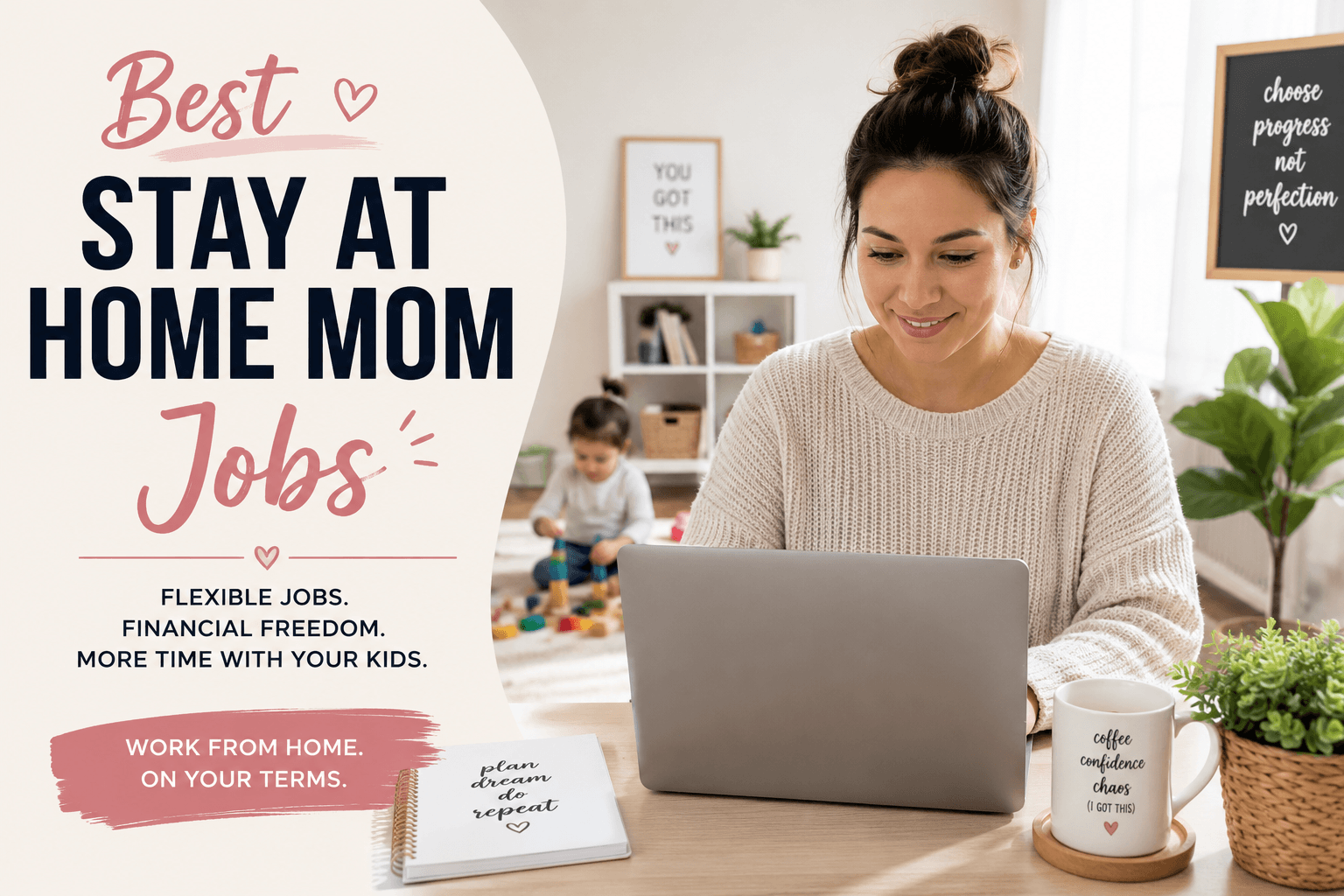
31 Best Stay-at-Home Mom Jobs in 2026 (That Can Actually Make Money)
Staying home with your children and earning meaningful income are no longer mutually exclusive. Remote work, freelancing, online marketplaces, local service businesses, and creator tools have opened more flexible paths than parents had even a few years ago.
The best option is one you can learn, schedule around your household, and grow at a pace that makes sense for you. Some ideas below can become full-time businesses; others work better as part-time income.
Real skills.
More choices.
Can stay-at-home moms really earn good money from home?
Yes—but the realistic answer is more useful than the exciting one. Legitimate work-from-home income usually comes from providing a service, selling a product, building an audience, completing skilled contract work, or working remotely for an employer. The more useful your skill becomes, the more earning power you generally have.
You also do not need every work-from-home job to be perfectly quiet, perfectly passive, or perfectly flexible. A parent with school-age children may be comfortable with scheduled calls, while a parent caring for a baby may prefer project-based work that can be completed during naps, evenings, or weekends.
What makes a good stay-at-home mom job?
I would prioritize five things: flexible scheduling, low-to-reasonable startup costs, a clear path to getting customers or clients, skills that become more valuable over time, and work you can realistically continue while managing family responsibilities.
- Start a blog or niche website
- Virtual assistant
- Freelance writer
- Proofreader
- Bookkeeper
- Graphic designer
- Social media manager
- UGC creator
- Online tutor
- Online teacher
- Transcriptionist
- Remote customer support
- Etsy seller
- Sell printables
- Resell products online
- Flip used items
- Amazon seller
- Photographer
- Sell stock photography
- Pet sitter
- Home childcare
- Laundry service
- Meal-prep service
- Home beauty services
- Travel advisor
- Online stylist
- Baby-gear rental
- Short-term rental host
- Baby sleep consultant
- Coach or consultant
- Licensed insurance agent
1. Start a Blog or Niche Website
A blog can become a flexible online business built around search traffic, email subscribers, affiliate marketing, sponsorships, digital products, display advertising, or services. It is especially attractive to parents because much of the work can be done asynchronously.
Choose a focused topic where people actively look for answers: parenting, budgeting, recipes, home organization, travel, career skills, software tutorials, beauty, pets, hobbies, or another area where you can create genuinely useful content. Your first goal should be helpful articles—not monetization tricks.
See the Blogging Resource →
2. Become a Virtual Assistant
Virtual assistants help businesses with inbox management, scheduling, research, customer follow-up, spreadsheets, basic bookkeeping, blog uploads, ecommerce tasks, social media, and dozens of other administrative jobs.
A smart way to stand out is to specialize. For example, you might become a Pinterest VA, podcast VA, ecommerce VA, real-estate VA, or executive assistant. Specialists can often charge more than generalists because the client needs less training and supervision.
Explore VA Training →
3. Work as a Freelance Writer
Businesses constantly need blog posts, email sequences, product descriptions, case studies, scripts, landing pages, newsletters, and help-center content. If you write clearly and can research responsibly, freelance writing can be one of the most schedule-friendly service businesses.
Build three to five strong samples in one niche, create a simple portfolio, and pitch businesses that already invest in content. A narrow specialty—such as personal finance, SaaS, healthcare, real estate, or ecommerce—can make your offer easier to understand.
4. Become a Proofreader
Proofreaders check writing for spelling, grammar, punctuation, consistency, and formatting problems before it is published. Clients can include authors, bloggers, agencies, students, businesses, and publishers.
The work is usually deadline-based rather than shift-based, which can make it easier to fit around family schedules. Strong attention to detail matters more than typing speed.
Learn About Proofreading →
5. Offer Remote Bookkeeping Services
Small businesses need help organizing transactions, reconciling accounts, preparing reports, tracking invoices, and keeping their books clean. Modern cloud accounting platforms allow much of this work to be completed remotely.
Bookkeeping can be a strong option for someone who likes routines, accuracy, and numbers. Depending on what services you offer and where you live, training or professional requirements may apply.
6. Become a Graphic Designer
Graphic designers create social posts, presentation decks, lead magnets, ebooks, ads, logos, packaging, printables, thumbnails, and website graphics. You can begin with smaller projects and gradually move toward higher-value brand packages or ongoing design retainers.
A portfolio matters more than a long résumé for many freelance design projects. Create sample work in the type of design you want clients to hire you for.
Try the Design Resource →
8. Create UGC for Brands
User-generated-content creators make product demonstrations, testimonials, unboxings, lifestyle clips, and short vertical videos that brands can use in ads or on social platforms. You do not necessarily need a large audience because the brand is paying for the content itself.
Build a small portfolio with sample videos, decide which product categories you are comfortable working with, and pitch brands or join creator marketplaces.
9. Tutor Students Online
If you are confident in math, reading, science, test preparation, music, languages, or another subject, tutoring can offer attractive hourly income. Sessions can happen online or locally, depending on your schedule and market.
Parents often value consistency, patience, and clear communication as much as advanced credentials. Requirements vary by platform and subject.
10. Teach Online Classes
Online teaching goes beyond traditional school subjects. Parents can teach art, crafts, beginner coding, music, conversation practice, cooking, study skills, or hobby-based classes through educational platforms or independently.
This option is less flexible than asynchronous freelance work because classes happen at specific times, but the schedule can still be built around evenings, weekends, or school hours.
11. Work as a Transcriptionist
Transcriptionists convert recorded audio or video into written text. The work rewards careful listening, fast and accurate typing, good grammar, and the ability to follow formatting rules.
General transcription is one route; legal and medical transcription may involve additional knowledge, training, privacy responsibilities, or certification.
12. Get a Remote Customer Support Job
Companies hire remote representatives for phone, live-chat, email, technical support, customer success, and order assistance. These roles can provide more predictable income than freelancing.
The tradeoff is scheduling: some employers require fixed shifts and a quiet workspace. Chat- or email-based roles may be easier for some parents than phone-heavy positions.
Browse Remote Jobs →
13. Open an Etsy Shop
Etsy can work for handmade products, personalized gifts, craft supplies, vintage items, and certain digital products. The most important step is not opening the store—it is choosing a product people are already searching for and presenting it with strong photos, keywords, pricing, and customer service.
Physical products require production and fulfillment time, so calculate your real labor and shipping costs before deciding what to sell.
14. Sell Digital Printables and Templates
Digital products can include planners, checklists, worksheets, invitations, budget sheets, resume templates, classroom resources, social media templates, and printable wall art.
The attraction is that the same file can be sold repeatedly. The challenge is competition, so quality, a clear niche, useful design, and strong product listings matter.
See the Digital-Product Tool →
15. Resell Products Online
Reselling is simple in concept: buy an item below its resale value, then sell it for a profit after accounting for fees, shipping, returns, and your time. Clothing, collectibles, home goods, toys, electronics, and specialty items can all have active resale markets.
Start small and learn one category well. Knowledge about brands, condition, seasonality, and pricing is where much of the advantage comes from.
16. Flip Furniture or Used Items
Local marketplaces can be good places to find underpriced furniture, tools, baby gear, home décor, or collectibles. Some sellers simply clean and photograph items better; others repair or refinish them to increase value.
This is not entirely “work from home,” but it can be flexible and can fit parents who enjoy bargain hunting, restoration, and local selling.
17. Sell Products Through Amazon
Amazon sellers use several models, including retail arbitrage, wholesale, private label, handmade goods, and books. Each model has different startup costs, risks, and operational requirements.
Do not buy large amounts of inventory before understanding marketplace fees, category restrictions, competition, returns, taxes, and expected margins.
Explore the Seller Resource →
18. Start a Photography Business
Family portraits, newborn sessions, branding shoots, product photos, real-estate photography, events, and seasonal mini-sessions can all become small photography businesses.
You do not need to buy every piece of equipment at the beginning. Strong lighting, composition, editing, reliability, and a clear portfolio can matter more than owning the most expensive camera.
19. Sell Stock Photos, Video Clips, or Content Bundles
Publishers, marketers, and designers buy visual assets every day. You can license stock images and footage or sell themed content bundles directly to businesses and creators.
This model usually rewards a large, useful portfolio rather than a handful of random uploads. Think in terms of what buyers need: seasonal images, business concepts, family lifestyle scenes, food, travel, diverse workplaces, and hard-to-stage situations.
20. Offer Pet Sitting or Dog Boarding
If your home, schedule, local rules, and family situation are a good fit, pet sitting can turn spare capacity into income. Services can include boarding, drop-in visits, dog walking, and house sitting.
Make sure you understand insurance, safety, vaccination expectations, pet behavior, and any landlord or municipal restrictions before accepting animals.
See Pet-Sitting Opportunities →
21. Run a Small Home Childcare Business
For parents who enjoy caring for children, home daycare can create income while allowing them to remain with their own kids. Demand can be strong where childcare is expensive or limited.
Licensing, background checks, insurance, capacity limits, inspections, food rules, and home-safety requirements vary substantially by location, so verify local regulations before offering paid childcare.
22. Provide Wash-and-Fold Laundry Service
Busy professionals, families, elderly customers, students, and short-term rental hosts may pay for convenient laundry service. You can offer pickup and delivery or have customers drop laundry off, depending on local conditions.
Price carefully for water, electricity, detergent, machine wear, folding time, transportation, and special-care items.
23. Start a Meal-Prep Service
Meal prep can be narrowed to a specific need: healthy lunches, freezer meals, family dinners, postpartum meals, breakfast boxes, or culturally specific dishes.
Food businesses are regulated in many places. Before selling anything prepared at home, check cottage-food laws, food-safety rules, licensing, labeling, and insurance requirements in your area.
24. Offer Beauty Services From Home
Depending on your training and local regulations, hair styling, nails, makeup, lashes, skincare, braiding, or other personal-care services can become appointment-based home businesses.
This work can be profitable because repeat clients matter. However, licensing, sanitation, insurance, and home-salon requirements may apply, so confirm the rules where you live.
25. Become a Travel Advisor
Travel advisors help clients choose destinations, compare accommodations, organize itineraries, book trips, and solve travel problems. Some work independently while others join host agencies.
A useful niche—family travel, cruises, destination weddings, luxury trips, group travel, or a geographic specialty— can make it easier to attract the right clients.
26. Work as an Online Stylist or Personal Shopper
People pay for help choosing clothing, gifts, home décor, beauty products, and other purchases. Some companies hire stylists, while independent consultants build packages around virtual consultations and curated recommendations.
This is a natural fit for someone who enjoys trends, communicates well, and can make useful recommendations without pressuring customers to overspend.
27. Rent Out Baby Gear
Families traveling with young children may prefer to rent strollers, cribs, high chairs, toys, or other bulky gear at their destination instead of flying with everything.
This works best where there is steady visitor demand. Safety, sanitation, product recalls, liability, delivery, and proper insurance deserve serious attention.
28. Host a Short-Term Rental
If you have a suitable room, guest suite, second property, or other legal accommodation, short-term rentals can generate income from an asset you already control.
This is not passive: cleaning, guest communication, maintenance, local taxes, insurance, permits, and changing local regulations can all affect profitability.
29. Become a Baby Sleep Consultant
Some parents turn their interest in infant sleep and family routines into coaching businesses. Consultants may offer assessments, written plans, virtual calls, and follow-up support.
Because advice involving babies can touch health and safety, training, careful scope-of-practice boundaries, and evidence-based guidance are especially important. Never present coaching as medical care.
30. Build a Coaching or Consulting Business
If you have meaningful experience in a field, you may be able to package it into consulting or coaching. Examples include career coaching, business consulting, organization coaching, productivity, fitness instruction, or creative mentoring.
Be precise about what you are qualified to help with. Fields such as health, mental health, nutrition, law, and finance can involve licensing or professional restrictions, so do not operate beyond your credentials.
31. Work From Home as a Licensed Insurance Agent
Insurance sales and service roles are increasingly handled remotely. Depending on the role, agents may educate customers, quote policies, sell coverage, manage renewals, or provide account support.
Insurance is regulated. Licensing requirements vary by state or country, and compensation may include salary, commission, or both.
Which stay-at-home job should you choose?
If you need income quickly, a service business or remote job can often reach revenue faster than building an audience. If you want maximum schedule control, freelancing, digital products, blogging, or reselling may offer more flexibility. If you prefer predictable work, remote employment may be a better fit than entrepreneurship.
The most useful question is not “Which job makes the most money?” It is “Which one can I realistically start, continue, and get good at?”
A quick comparison
| Type of work | Flexibility | Usually fastest path | Main challenge |
|---|---|---|---|
| Freelancing | High | Pitch clients directly | Finding clients consistently |
| Remote employment | Medium | Apply to active openings | Fixed schedules/interviews |
| Local services | Medium–High | Local referrals and groups | Logistics and regulations |
| Blog/content business | Very high | Publish useful content consistently | Usually slow to build traffic |
| Digital products | Very high | Launch a narrow useful product | Standing out in a crowded market |
| Reselling/ecommerce | High | Start with small inventory | Fees, margins, returns, inventory |
How to start without getting overwhelmed
Pick one path for the next 30 days. Learn the minimum skills required, create one simple offer or résumé, and take one customer-acquisition action every day. That might mean sending pitches, applying for jobs, listing products, publishing useful content, or asking local customers for referrals.
Avoid spending months buying courses, tools, branding packages, and equipment before you have evidence that customers want what you plan to offer. A small real-world test is usually more valuable than endless preparation.
Get the Free Starter Guide →
Internal links to add for stronger SEO
Instead of copying another publisher’s internal links, connect this article to your own supporting content. For example, you can link to articles about starting a blog, beginner freelance jobs, online business tools, remote-job websites, affiliate marketing, budgeting, Etsy, or side hustles.
- How to Start a Blog for Beginners
- Best Remote Job Websites
- Best Side Hustles You Can Start From Home
- Beginner Guide to Affiliate Marketing
Frequently Asked Questions
What is the best job for a stay-at-home mom with no experience?
Entry-level virtual assistance, customer support, reselling, simple freelance services, pet sitting, and some local service businesses can be easier to enter without a long professional background. The best choice still depends on your schedule, abilities, and local market.
What stay-at-home jobs have the most flexible schedules?
Blogging, freelance writing, proofreading, design, digital products, reselling, and some virtual-assistant work can be highly flexible because much of the work is project-based rather than tied to a shift.
Can I work from home while caring for a baby?
It is possible, but work that requires uninterrupted calls or fixed meetings can be difficult without childcare. Asynchronous work is often easier to fit around naps, evenings, or help from a partner or family member.
How can I avoid work-from-home scams?
Be cautious of guaranteed-income claims, requests to pay large upfront fees simply to access a job, fake-check schemes, reshipping jobs, vague companies, and pressure to recruit others. Research the company independently and understand exactly how you will be paid before sharing sensitive information.
Should I start more than one side hustle?
Usually not at first. One focused offer is easier to improve and market. Once you have consistent income or a repeatable process, adding a complementary second income stream can make more sense.


7. Manage Social Media for Small Businesses
Many local businesses need someone to create posts, schedule content, answer basic messages, repurpose videos, and keep their pages active. Restaurants, salons, real-estate agents, coaches, contractors, and ecommerce brands can all be potential clients.
Start with one platform you understand well. A focused offer such as “12 Instagram posts plus four short-form videos per month” is easier to sell than a vague promise to “do social media.”