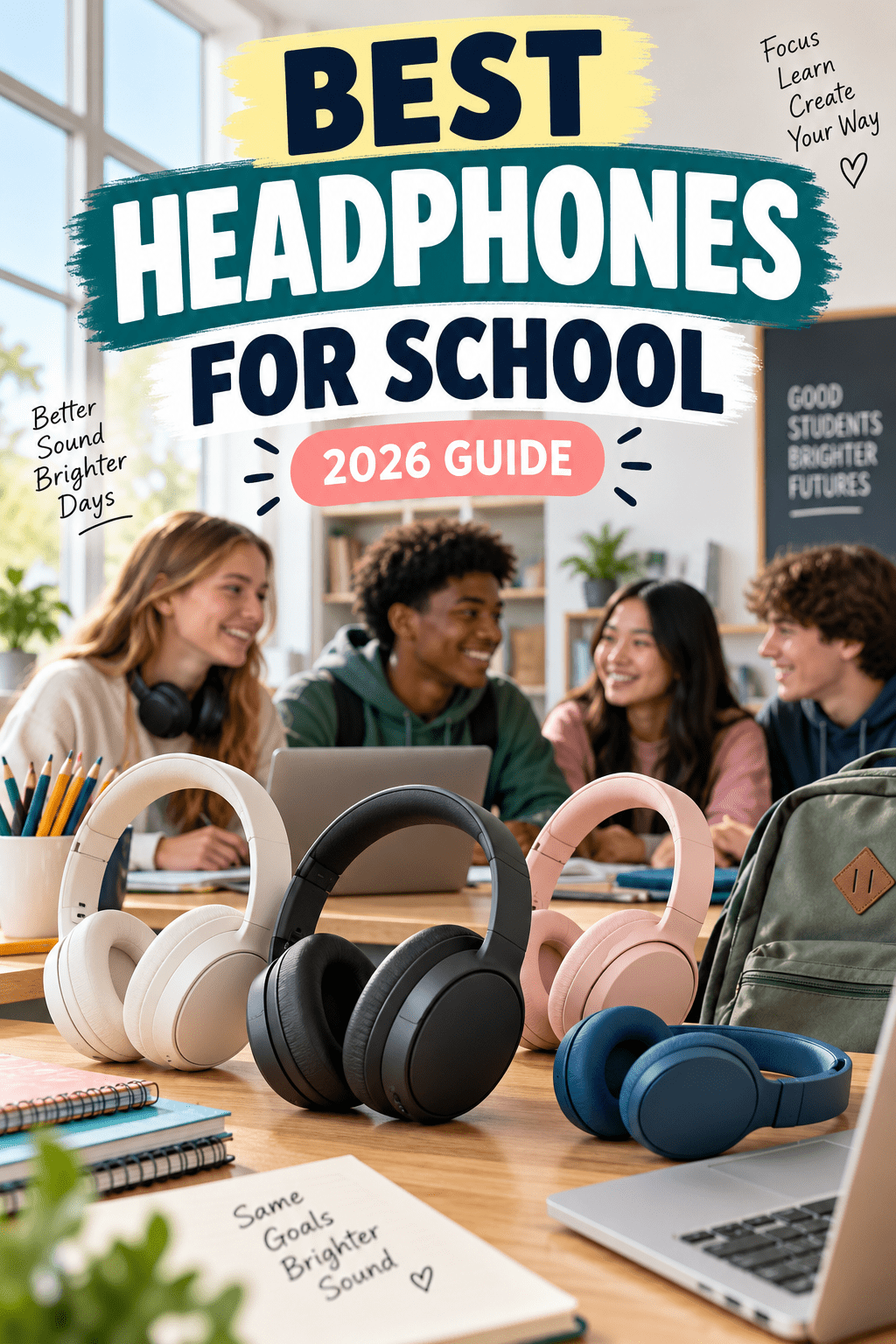
Top 6 Best Headphones for School — From Budget to Premium Choices!
Need headphones for lectures, studying, commuting, online classes, or a noisy dorm? This guide compares six student-friendly options from inexpensive everyday models to premium active-noise-cancelling headphones, with school-specific advice on comfort, battery life, microphones, wired compatibility, and safe listening.
Updated September 2026 • Original buying guide based on current manufacturer specifications and current product listings.
Buying headphones for school looks simple until you try to choose one pair that has to work everywhere. A student may use the same headphones for a recorded lecture at 8 a.m., quiet background music in the library, a group-project call after lunch, a bus ride home, and entertainment at night. That makes “best” less about one laboratory score and more about how a headphone fits an actual school routine.
The six models below cover distinct budgets and priorities. The Sony WH-CH520 and JBL Tune 520BT focus on low cost, portability, and battery life. Soundcore Space One adds real active noise cancellation without jumping into flagship pricing. Beats Solo 4 emphasizes compact style, very long battery life, and flexible wired/wireless connectivity. Sony WH-1000XM5 and Bose QuietComfort target students who spend enough time in noisy environments to justify premium ANC and comfort.
This article does not pretend every student needs the most expensive option. In fact, a premium headphone can be wasted money if you mainly study in a quiet bedroom. The goal is to help you match features to the environments you actually use: classroom, library, dorm, commute, home, computer lab, or campus study lounge.
Quick Picks: The Best Headphones for School by Need
Soundcore Space One
Choose it if background noise is your biggest study problem and you want ANC without a flagship price.
Check on AmazonSony WH-CH520
Choose it for a light, uncomplicated everyday headphone with excellent battery life and a student-friendly price.
Check on AmazonBose QuietComfort
Choose it when long-session comfort and strong ANC matter more than getting the lowest possible price.
Check on AmazonHeadphones for School: At-a-Glance Comparison
Use this table to narrow the field before reading the detailed reviews. Battery figures are manufacturer-rated maximums and can vary with volume, codecs, ANC, call use, temperature, and settings.
| Headphone | Best for | Design | ANC | Rated battery | Amazon |
|---|---|---|---|---|---|
| Sony WH-CH520 | Budget Pick | On-ear wireless | No | Up to 50 hours | Check price |
| JBL Tune 520BT | Battery Value | On-ear wireless | No | Up to 57 hours | Check price |
| Soundcore Space One | ANC Under $100 | Over-ear wireless ANC | Yes | Up to 40h ANC / 55h standard | Check price |
| Beats Solo 4 | for Style + Apple/Android | On-ear wireless + wired | No | Up to 50 hours | Check price |
| Sony WH-1000XM5 | Premium ANC for Focus | Over-ear premium ANC | Yes | Up to 30 hours with ANC | Check price |
| Bose QuietComfort Headphones | Premium Comfort | Over-ear premium ANC | Yes | Up to 24 hours | Check price |
1. Sony WH-CH520 — Headphones for School Budget Pick
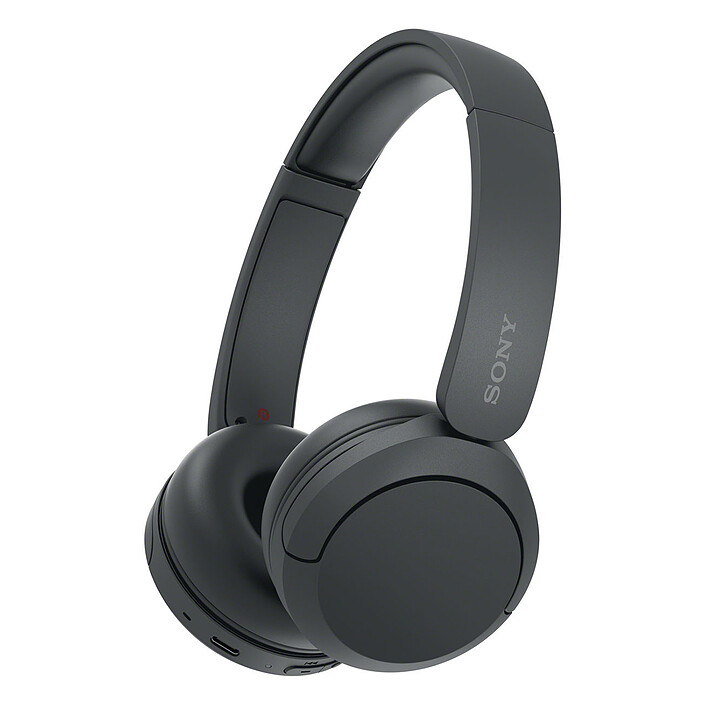
Product image shown for identification. Availability, color and price can change.
Headphones for School Verdict
The WH-CH520 is the easiest recommendation in this list for a student who mainly needs dependable Bluetooth audio for lectures, study playlists, language practice, calls, and commuting without paying for premium noise cancellation.
Why These Headphones for School Work Well
For school use, simplicity is often more valuable than a giant feature list. The Sony WH-CH520 is built around that idea. It is compact, light, and straightforward enough to move from a morning bus ride to a library session and then to a video call without turning audio into another thing you have to manage. Sony lists Bluetooth 5.2, USB-C charging, AAC and SBC support, and an approximate weight of 5.2 ounces. That low weight matters more than it sounds when headphones live in a backpack all day.
Battery life is the biggest practical advantage. Sony markets the model for up to 50 hours of music playback, while its support specification page lists up to 40 hours of continuous communication time. Either way, the student-friendly point is that you are unlikely to need daily charging. A student who forgets cables, moves between classrooms, or uses headphones in short bursts can often get through several days before looking for a charger.
The sound presentation is designed for mainstream listening rather than studio analysis. Voices in recorded lectures remain easy to follow, podcasts are clear enough for long sessions, and music has the energetic character most students expect from casual headphones. The Sony Headphones Connect app also gives you EQ control, which is useful if you prefer more vocal presence for lectures or a softer bass balance while reading.
The compromise is isolation. Because these are on-ear headphones without ANC, they do not erase cafeteria chatter, a loud roommate, or engine rumble the way the premium options below can. They work best in a reasonably quiet library, bedroom, classroom before instruction begins, or at-home study desk. If your biggest problem is noise rather than price, move up to the Soundcore Space One or one of the premium ANC models.
Comfort is personal with any on-ear design. The WH-CH520 avoids the bulky clamp of many larger headphones, but the pads rest on the ears instead of surrounding them. For a two-hour homework block that can be perfectly comfortable; for an all-day study marathon, some people will prefer an over-ear model. The upside is portability: the earcups swivel flatter and the headphone takes much less room than a large hard-case ANC headset.
The WH-CH520 is also a good “school-issued laptop” companion because it does not need special software for basic use. Pair it once through Bluetooth, use the physical controls for volume and calls, and keep moving. Students who want a wired backup for airplanes, old desktops, or testing-center equipment should note that this model does not provide a traditional analog audio input.
Pros
- Very light on the head and easy to carry
- Excellent battery endurance for a school-week routine
- Simple physical controls and reliable Bluetooth
- Good value when ANC is not a requirement
Consider before buying
- On-ear pads can become tiring for some listeners during very long sessions
- No active noise cancellation
- No 3.5 mm wired input
2. JBL Tune 520BT — Headphones for School Value Pick

Product image shown for identification. Availability, color and price can change.
Headphones for School Verdict
JBL’s Tune 520BT is a strong alternative to the Sony budget pick, especially for students who want very long rated battery life, a familiar bass-forward tuning, and multipoint Bluetooth for moving between a phone and laptop.
Why These Headphones for School Work Well
If you are comparing headphones for school on a student budget, the JBL Tune 520BT deserves a close look.
The JBL Tune 520BT earns a place near the top of the budget category because it covers the parts of student life that happen every day: long battery life, quick pairing, simple controls, and a design that can be folded into a backpack. JBL specifies Bluetooth 5.3 and up to 57 hours of playback, which gives it one of the longest headline battery ratings in this roundup. For a student, that means fewer moments where a dead headset interrupts a lecture or study block.
JBL Pure Bass tuning gives the 520BT more low-end emphasis than a neutral classroom headset. That can make playlists and videos feel lively, but it is not only about music. Speech remains understandable, and the companion app lets you adjust EQ if bass becomes distracting during recorded classes. For students who use one pair of headphones for school, gaming videos, music, and social media, that versatility is part of the appeal.
Multipoint is the sleeper feature. A common student setup is a laptop open for schoolwork and a phone nearby for messages or calls. Multipoint lets the headphone stay connected to more than one compatible device so you do not constantly open Bluetooth menus. It is a small quality-of-life improvement that becomes valuable after dozens of switches per week.
The 520BT is also easy to recommend for commuters because the folding design is compact and the battery is forgiving. It does not include active noise cancellation, however, so bus and train rumble will still compete with your audio. Raising the volume to overpower noise is not the answer; the safer approach is to choose better isolation or ANC when you regularly study in loud environments.
Like the Sony WH-CH520, this is an on-ear model. Students who wear glasses may actually prefer the smaller pad footprint, while others may find pressure on the outer ear annoying after several hours. There is no universal winner on comfort, so the best sign is whether you already enjoy on-ear headphones. If your current on-ear pair makes your ears sore, move toward the over-ear options in this guide.
For the money, these headphones for school are best viewed as an everyday utility option rather than a miniature premium ANC headset.
For the money, the Tune 520BT is best viewed as an everyday utility headphone rather than a miniature premium ANC headset. It does the basics well, lasts a long time between charges, and fits a student budget. That makes it especially useful for middle school, high school, college, or remote-learning situations where durability and convenience matter more than having every premium audio feature.
Pros
- Up to 57 hours of rated battery life
- Bluetooth multipoint is useful for phone + laptop workflows
- Foldable, portable design
- Fast charging helps when you forget to charge overnight
Consider before buying
- No ANC for loud study spaces
- On-ear pressure may not suit every listener
- Bass emphasis is not ideal for everyone
3. Soundcore Space One — Headphones for School ANC Pick
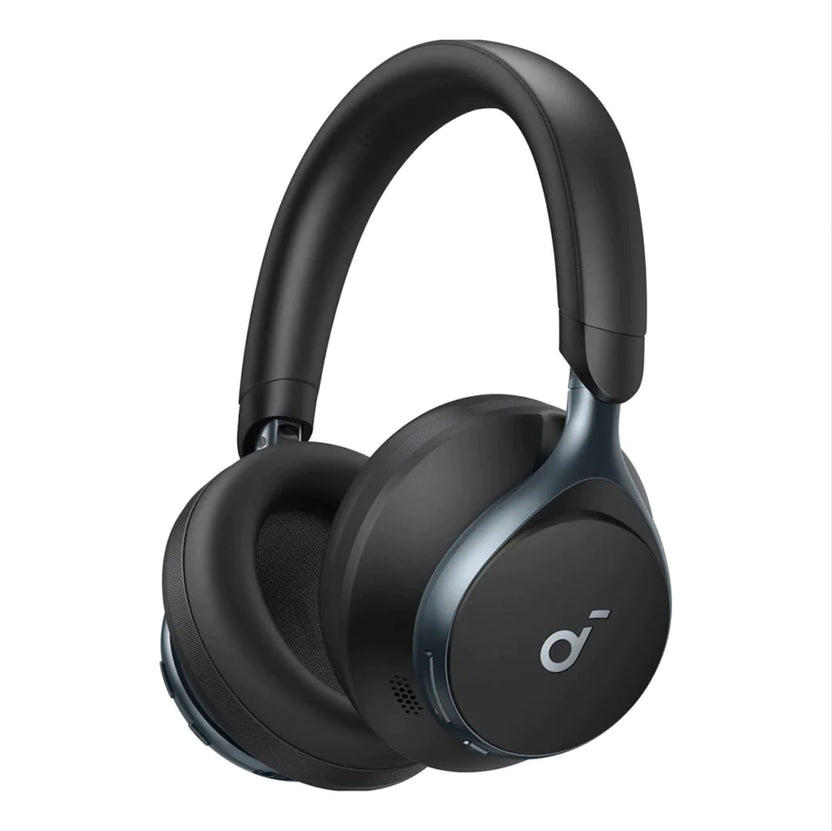
Product image shown for identification. Availability, color and price can change.
Headphones for School Verdict
Space One is the value sweet spot of the list. It combines over-ear comfort, strong battery life, app controls, multipoint, and active noise cancellation at a price that is much easier to justify for school than flagship models.
Why These Headphones for School Work Well
The Soundcore Space One is the first model in this ranking that meaningfully changes the experience of studying around other people. Instead of simply playing audio over background noise, its active noise cancellation works to reduce steady distractions such as air-conditioning hum, bus rumble, hallway noise, and the low-frequency part of conversation. Soundcore advertises up to 98% noise reduction under its laboratory test conditions, but the more useful real-world takeaway is that this is a genuine ANC headphone rather than a passive-isolation budget model.
Battery life remains student-friendly even with ANC turned on. Soundcore rates Space One for up to 40 hours with ANC and up to 55 hours in normal mode. That means a student can use noise cancellation through multiple school days without treating charging as a nightly obligation. The company also advertises a five-minute fast charge for several hours of listening, which is exactly the sort of emergency feature that matters before an early class.
Over-ear cushions make Space One better suited to long study sessions than many on-ear models. The larger earcups distribute pressure around the ears, and the headband is padded enough for extended wear. The tradeoff is size. This is not the pair you slip into a tiny jacket pocket, so students should leave room in a backpack or use a protective pouch if books, chargers, and metal bottles share the same compartment.
Soundcore’s app adds features that are more useful than the price suggests. EQ lets you bring vocals forward for lectures, reduce bass while reading, or create a more energetic music profile after school. Multipoint connection helps students stay paired with a phone and laptop. Transparency modes can also make it easier to hear announcements or speak with someone without fully removing the headphones.
For calls and online classes, Space One is capable enough for routine school use. It will not turn a noisy cafeteria into a recording studio, but the microphone system is suitable for class discussion, tutoring sessions, and study-group calls in normal environments. Students who spend several hours per day in meetings may still prefer a dedicated boom-mic headset, but that comes at the expense of everyday portability.
Space One is the recommendation for the student who says, “I cannot focus when people around me are talking, but I do not want to spend flagship money.” It is also the point in this list where paying more starts buying refinement rather than simply fixing a missing feature. Premium Bose and Sony headphones cancel noise more naturally and feel more polished, but Space One gets you most of the practical school benefits for far less.
Pros
- Active noise cancellation at a student-friendly price
- 40-hour rated battery with ANC enabled
- Comfortable over-ear fit for long sessions
- Multipoint, app EQ, and useful travel features
Consider before buying
- Build feels less luxurious than premium models
- ANC is strong for the price but not flagship-class
- Large earcups take more backpack space than on-ear picks
4. Beats Solo 4 — Stylish Headphones for School
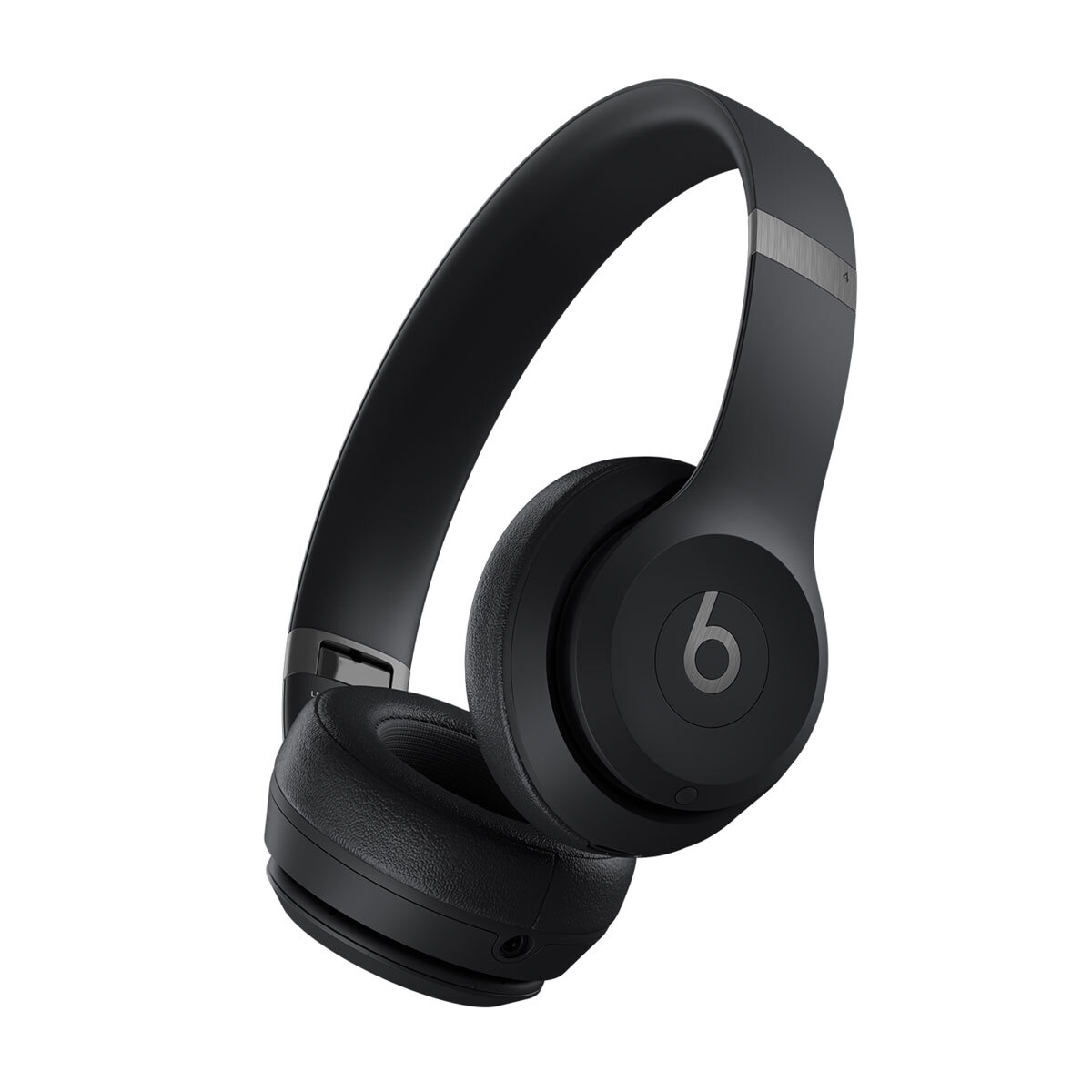
Product image shown for identification. Availability, color and price can change.
Headphones for School Verdict
Solo 4 is less about maximum isolation and more about portability, ecosystem convenience, wired flexibility, and a refined everyday design. It is especially compelling when school headphones must also be the pair you wear everywhere else.
Why These Headphones for School Work Well
Beats Solo 4 occupies a different lane than Soundcore Space One. It does not offer active noise cancellation, yet it can still make sense for school because it is compact, long-lasting, and unusually flexible about how you connect. Beats lists up to 50 hours of battery life, Fast Fuel charging, USB-C audio, Bluetooth 5.3, and a traditional 3.5 mm analog input. That combination is valuable when your day includes a phone, laptop, classroom computer, airplane screen, or another device that does not fit one connection method.
For Apple users, Solo 4 integrates with familiar features such as one-touch pairing and Find My. Android users are not treated as an afterthought; Beats supports Fast Pair and Find My Device on compatible Android products as well. That cross-platform approach is useful for students whose personal phone and school-issued computer come from different ecosystems.
The on-ear design keeps the footprint smaller than an over-ear ANC model. It folds, fits into a compact case, and is easier to wear around your neck while walking between classes. The physical design also looks more like a lifestyle product than a call-center headset, which matters to students who only want to carry one pair all day. The downside is the same one that applies to every on-ear headphone: some people feel pressure on the ears during long sessions.
Solo 4’s lack of ANC should shape where you use it. In a quiet library, bedroom, computer lab, or classroom study period, passive isolation can be enough. In a noisy dorm, train, or crowded student center, you will hear more of the environment than you would through Space One, Sony WH-1000XM5, or Bose QuietComfort. Do not compensate by turning volume dramatically higher; choose the right type of headphone for the environment.
The wired options are a real academic advantage. Bluetooth is convenient, but school environments can be unpredictable. A teacher may ask you to connect to a desktop PC, a language lab may use a headphone jack, or you may want zero-latency audio for editing a presentation. Having a cable option gives Solo 4 more resilience than wireless-only budget models.
Solo 4 is therefore best for students who care about design, portability, battery life, and device compatibility more than ANC. If you routinely study around loud noise, the value equation favors Space One. If your spaces are usually quiet and you want a headphone that transitions from class to commuting to everyday fashion, Solo 4 has a clearer purpose.
Pros
- Up to 50 hours of battery life
- USB-C and 3.5 mm audio options
- Works well across Apple and Android ecosystems
- Compact, recognizable design with strong portability
Consider before buying
- No active noise cancellation
- On-ear design can create pressure during long sessions
- Price can overlap with capable ANC headphones
5. Sony WH-1000XM5 — Premium Headphones for School
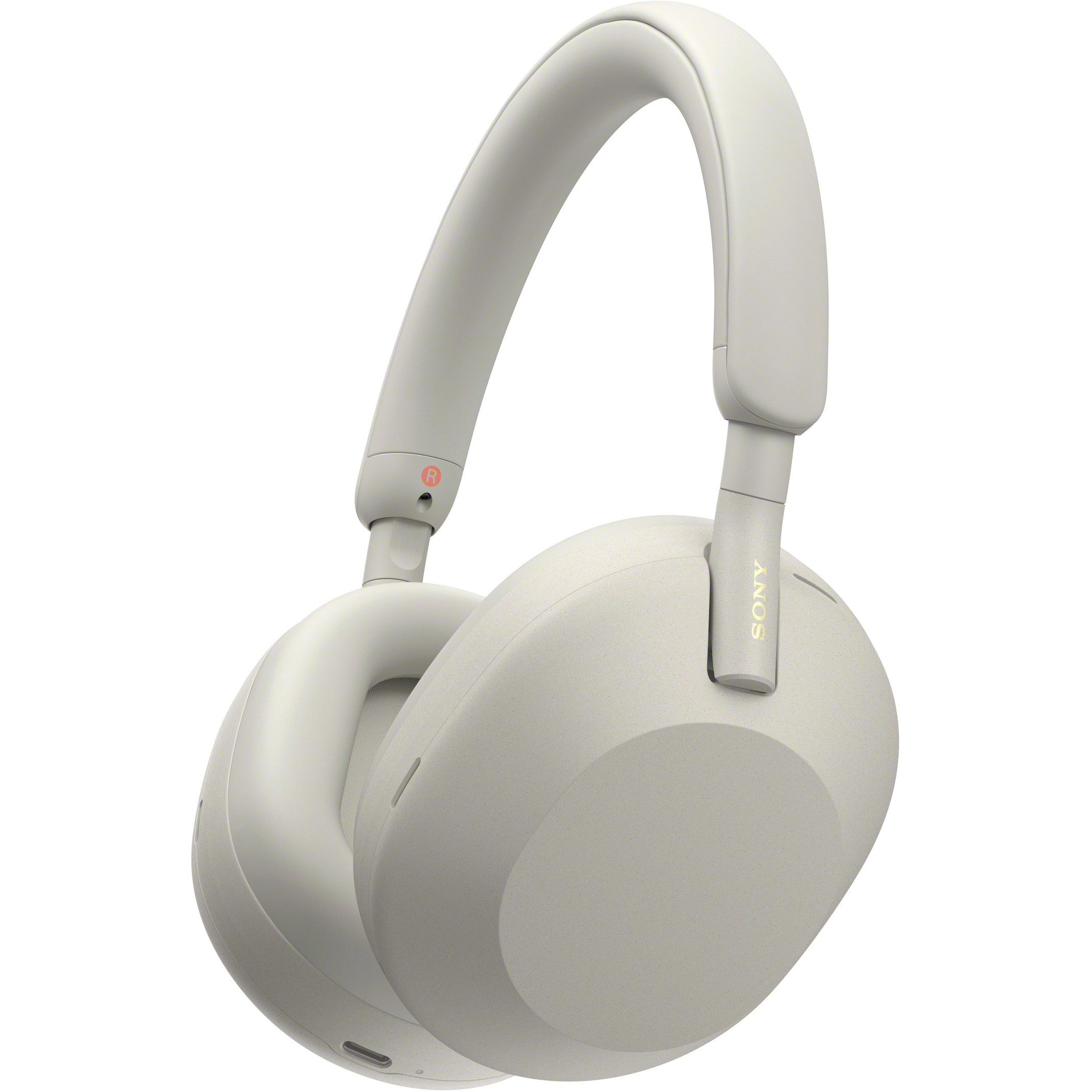
Product image shown for identification. Availability, color and price can change.
Headphones for School Verdict
The WH-1000XM5 is the “focus first” premium choice. It costs much more than the budget models, but its combination of ANC, microphones, app control, comfort, and smart features can justify the price for students who spend hours every day in noisy environments.
Why These Headphones for School Work Well
The Sony WH-1000XM5 is where headphones become a serious focus tool rather than merely an accessory. Its active noise cancellation is designed to attack the environmental sounds that make studying difficult: HVAC rumble, buses, planes, distant conversations, and the constant low-level noise of shared spaces. No ANC headphone can make every voice disappear, but the XM5 lowers enough of the background that lectures, reading music, and quiet audio require less volume and less mental effort to follow.
Sony rates battery life at up to 30 hours with noise cancellation enabled, which is more than enough for a full day of classes plus commuting. Fast charging is another practical advantage: Sony advertises roughly three hours of playback from a three-minute charge when using a compatible USB-PD adapter. That can rescue a morning when you discover the battery is nearly empty minutes before leaving.
The microphone system is one of the biggest reasons to consider the XM5 over cheaper ANC models. Students who take remote seminars, office-hour calls, internships, interviews, or group-project meetings benefit from clearer voice pickup and better background-noise management. A dedicated boom microphone can still outperform it in extreme conditions, but the Sony is much easier to carry and wear as an everyday headphone.
Comfort is excellent for many users because the earcups fully surround the ears and the headband spreads weight across a broad area. The XM5 is lighter than its visual size suggests. For long study blocks, the combination of soft pads, low-frequency noise reduction, and no need to crank the volume can make it less fatiguing than cheaper on-ear models. Heat buildup can still occur with any sealed over-ear headphone, especially in warm rooms.
The Sony app gives you EQ, ambient-sound adjustment, adaptive behavior, device management, and other controls. Multipoint pairing is particularly useful for school: keep the laptop connected for class audio while remaining reachable on a phone. Ambient mode also lets you hear announcements or have a short conversation without removing the headphones.
The question is not whether the XM5 is good; it is whether your school routine can justify the price. If you commute daily, live with roommates, work in shared spaces, and use headphones for several hours every day, the cost is spread across a lot of use. If your main need is occasional music in a quiet room, Soundcore Space One or a budget pick gives you far better value.
Pros
- Flagship-level active noise cancellation
- Strong voice pickup for calls and online classes
- Comfortable over-ear design
- Excellent app, EQ, multipoint, and smart features
Consider before buying
- Premium price
- Does not fold as compactly as older Sony designs
- Overkill for students who mostly study in quiet rooms
6. Bose QuietComfort — Comfortable Headphones for School
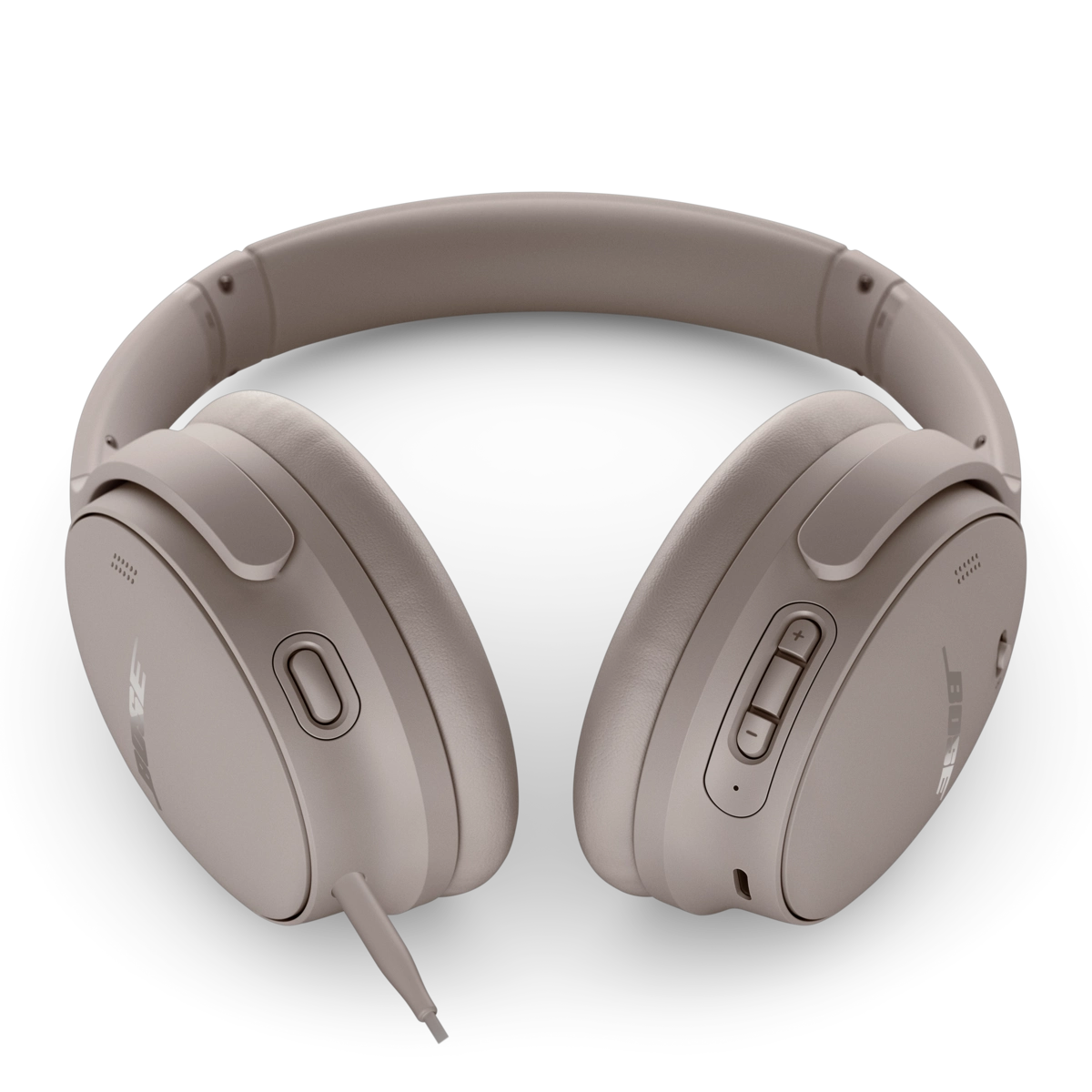
Product image shown for identification. Availability, color and price can change.
Headphones for School Verdict
Bose QuietComfort lives up to its name for long study sessions. It combines effective ANC with soft around-ear cushions, a foldable design, wired backup, and uncomplicated controls that make it easy to use for school and travel.
Why These Headphones for School Work Well
Bose QuietComfort is the premium pick for students who rank comfort just as highly as noise cancellation. The headphone’s around-ear cushions are soft, the clamp is generally easy to live with, and the foldable construction is practical for a backpack. Bose combines this with Quiet Mode for stronger isolation and Aware Mode when you need to hear the room around you.
Bose rates the current QuietComfort line for up to 24 hours of battery life, which is lower than many models in this guide but still enough for several class and study sessions between charges. Quick charging helps, and the included audio cable gives you a fallback when a device has a headphone jack or when the battery is depleted. That wired option can matter in labs, airplane seats, older PCs, or campus equipment where Bluetooth is restricted.
The sound is tuned for easy everyday listening. Vocals are clear, bass has weight without needing extreme volume, and the app provides adjustable EQ for students who want a little more control. Quiet Mode is the reason to pay for the Bose: by reducing persistent background sound, it can make a dorm room, campus lounge, or commute feel more manageable without forcing you to turn audio excessively loud.
Comfort becomes especially important when headphones are used for two or three hours at a time. Heavy clamp, hard pads, or pressure points can ruin a technically excellent product. QuietComfort avoids much of that friction. Students with glasses should still expect some variation in seal, but the soft cushions tend to accommodate frames better than tighter on-ear designs.
For calls, the built-in microphones are suitable for remote classes and everyday communication. As with other consumer ANC headphones, the best results come in a reasonably controlled environment rather than a windy street or packed cafeteria. If you frequently present in online classes from noisy spaces, use a quiet room when possible or consider a dedicated microphone.
Choose Bose over Sony if your priority is the combination of comfort, physical simplicity, and a foldable design. Choose Sony if you want the deepest smart-feature ecosystem and a particularly strong all-around premium package. Both are expensive compared with Soundcore Space One, so the value depends on how many hours per week you actually use headphones.
Pros
- Very comfortable for long sessions
- Strong noise cancellation with Quiet and Aware modes
- Foldable design and included case
- Wired playback option adds school and travel flexibility
Consider before buying
- Battery rating trails some rivals
- Premium price
- Sound customization is less expansive than some enthusiast-focused options
How We Chose These Headphones for School
A school headphone guide should not be a generic “best headphones” list with the word student added to the title. School creates specific constraints: backpacks, long wear time, shared spaces, unreliable access to outlets, switching between phones and laptops, remote classes, library etiquette, and rules that may favor a wired connection in certain situations. Our selection framework therefore gives more weight to practical daily use than to audiophile terminology.
Comfort came first. A headphone can sound impressive for ten minutes and still be a bad school purchase if it creates hotspots after an hour. We looked at weight, on-ear versus over-ear design, padding, clamp style, and portability. On-ear headphones such as the Sony WH-CH520 and JBL Tune 520BT save space and weight, while the over-ear Soundcore, Sony XM5, and Bose options generally distribute pressure better during longer sessions.
Battery life came next. Students already charge phones, tablets, laptops, watches, and sometimes styluses. A headphone should not become another device that dies halfway through the day. Long rated battery life and fast charging therefore receive meaningful weight. Real-world runtime will vary, but a high manufacturer rating provides a larger buffer when you forget to charge.
Noise management matters more than maximum loudness. In a dorm, café, bus, or busy household, the temptation is to raise volume until music overpowers the environment. ANC can reduce that need by lowering steady background noise. That is why Soundcore Space One, Sony WH-1000XM5, and Bose QuietComfort earn special consideration for students who regularly work around noise.
Connectivity had to fit school equipment. Bluetooth is convenient, but not every classroom computer, language lab, testing environment, or airplane screen supports your preferred wireless setup. Beats Solo 4 and Bose QuietComfort gain flexibility from wired playback. Multipoint is another valuable feature because students commonly switch between a laptop and phone throughout the day.
Microphone quality matters for modern school. Group projects, tutoring, office hours, remote classes, internships, and interviews all involve calls. We do not treat consumer headphones as professional broadcast gear, but a usable microphone is now part of the student checklist. Premium models typically invest more heavily in microphone processing, which is one reason they can be worth paying for if your workload includes frequent calls.
Finally, we considered value rather than assuming the most expensive product should rank first. “Value” means getting the features that solve your actual problem at the lowest sensible cost. If your library is quiet and you mainly listen to recorded lectures, the budget Sony may be the smarter buy. If you live in a loud dorm, strong ANC can be worth much more than a small improvement in sound quality.
How to Choose the Best Headphones for School
1. Decide Where You Will Use Your Headphones for School Most
Start with environment, not brand. A quiet bedroom favors low-cost headphones. A noisy bus, dorm, or shared study lounge favors ANC. A computer lab may reward a wired option. A student who walks between classes may care more about compact folding than maximum isolation.
2. Choose On-Ear or Over-Ear Headphones for School
On-ear headphones are lighter and smaller but place pressure directly on the outer ear. Over-ear headphones surround the ear and are usually better for long sessions, though they are bulkier and warmer. If you wear glasses, cushion softness and clamp can affect the seal.
3. Decide Whether ANC Headphones for School Are Worth It
ANC is most effective against steady low-frequency sounds such as engines, fans, and HVAC noise. It also reduces the overall background level in busy spaces. It does not create absolute silence, and nearby speech can still be audible, but good ANC can make concentration easier.
4. Check Battery Life on Headphones for School
Look beyond the maximum-hour number. Ask whether the quoted figure includes ANC, how long a full charge takes, and whether a five- or ten-minute quick charge can rescue you before class. A USB-C charging port is especially convenient because it may match other devices in your bag.
Wired vs. Wireless Headphones for School
Wireless is the most convenient choice for everyday school life. You can leave your phone in a bag, move around during a study session, and avoid cables catching on desk edges. Modern Bluetooth is also reliable enough for recorded lectures, music, video, and ordinary calls. The weakness is compatibility. Some school desktops disable Bluetooth, older devices may not support it well, and certain supervised environments prohibit wireless accessories.
A wired fallback solves those edge cases. Beats Solo 4 and Bose QuietComfort are particularly versatile because they can be used wirelessly for daily life and connected by cable when necessary. If your school specifically requires a 3.5 mm plug for testing software or a computer lab, verify the exact cable requirements before buying. Some devices use USB headsets instead, and a personal headphone may still be prohibited during examinations.
Do Headphones for School Really Need Noise Cancellation?
No. ANC is valuable only when there is noise to cancel. If you study at home in a calm room, spend most of your time in a quiet library, and rarely commute, paying an extra $100–$250 mainly for stronger ANC may not improve your grades or your experience. A light budget headphone can be more comfortable to carry and cheaper to replace.
ANC becomes much easier to justify when noise repeatedly breaks concentration. Consider the student living with roommates, riding a train for an hour per day, studying beside an air conditioner, or working in a busy household. In those situations, reducing environmental noise can make spoken lessons easier to hear at a moderate volume and can make quiet instrumental audio more effective as a focus aid.
Headphones for School Microphones for Zoom, Google Meet, Teams, and Tutoring
Built-in microphones are sufficient for many online classes, but they are not all equal. The farther the microphone sits from your mouth, the more it depends on digital processing to separate your voice from room noise. Premium consumer headphones such as Sony’s XM5 often perform better than basic budget models when there is competing sound.
If you give frequent presentations, record language assignments, tutor online, or participate in internships from home, consider your room as part of the audio system. A quiet space often improves call quality more than changing from one good consumer headphone to another. For the clearest possible voice, a headset with a boom microphone or a separate USB microphone can outperform lifestyle headphones.
Headphones for School Durability and Backpack Survival
School gear gets compressed between textbooks, dropped on desks, caught on zippers, and exposed to water bottles. A headphone that lives in a backpack should either fold compactly or have a protective case or pouch. Avoid throwing exposed earcups into the same compartment as keys, chargers, and hard-edged binders. Replaceable ear cushions are also valuable because pads are wear items; sweat, skin oils, and friction eventually break them down.
Hinges deserve attention on foldable models. Folding makes storage easier, but every hinge creates another mechanical stress point. Do not force earcups past their natural range, and do not pick up the headphone by one earcup. Premium pricing does not make a headphone indestructible.
Headphones for School Comfort During Long Study Sessions
Comfort is more than softness. Weight, clamping force, earcup depth, heat, head shape, glasses, earrings, and even hairstyle can change how a headphone feels. If you regularly study for three hours at a time, prioritize a design you can forget you are wearing. Over-ear Bose and Sony models are popular for this reason, while lighter on-ear designs win for portability.
Take short breaks even when the headphone feels comfortable. Removing the headset gives your ears and skin a rest, lets heat escape, and creates a natural moment to stand, stretch, drink water, or reset attention. Comfort should support a healthy study routine rather than encourage uninterrupted all-day wear.
Headphones for School Sound Quality for Lectures Versus Music
For lectures, the key is intelligibility. Clear midrange and vocals matter more than giant bass. If a headphone’s default tuning makes speech sound buried, use its EQ app to reduce bass slightly or raise the vocal range. Podcasts, audiobooks, and language-learning recordings can benefit from the same adjustment.
For music, preferences vary. JBL tends to deliver a more bass-forward character, while premium Sony and Bose models offer more flexible EQ and stronger isolation. Do not chase a “perfect” frequency response if your real goal is a comfortable tool for school. A headphone that you enjoy using at a safe volume is a better purchase than one chosen only from a graph.
Multipoint Is Underrated in Headphones for School
Multipoint Bluetooth allows compatible headphones to maintain connections with two devices. For students, the obvious pair is phone plus laptop. You can watch a lecture on the computer, then answer a phone call without manually disconnecting and repairing. It sounds minor until you do it dozens of times per week.
Multipoint behavior can vary by operating system and codec, so it is not always seamless in every combination. Still, it is one of the most practical “premium” features for school and work because it saves friction instead of merely adding another setting.
How Much Should You Spend on Headphones for School?
Under roughly the budget tier, prioritize comfort, battery life, and reliable Bluetooth. You will usually give up ANC, premium microphones, luxurious materials, and advanced app features. The Sony WH-CH520 and JBL Tune 520BT show how capable this tier has become.
In the middle tier, ANC becomes realistic. Soundcore Space One is the clearest example: it gives students a meaningful focus feature without requiring flagship pricing. This is often the best value tier for commuters and dorm residents.
Premium headphones make sense when you use them constantly. Sony WH-1000XM5 and Bose QuietComfort can be worthwhile for a student who commutes, works part-time, attends remote meetings, travels, and studies in shared environments. But do not stretch a student budget solely for a logo. The best purchase is the least expensive model that reliably solves your problems.
Safe Listening With Headphones for School Matters
Headphones are useful study tools, but volume and exposure time matter. The World Health Organization’s Make Listening Safe initiative warns that unsafe recreational sound exposure puts more than one billion young people at risk of avoidable hearing loss. WHO guidance encourages listeners to keep volume down, limit time in noisy environments, monitor listening levels, and use well-fitted or noise-cancelling headphones when appropriate.
That is another reason ANC can be valuable: you should not need to turn music dangerously loud just to overcome a bus engine or loud room. Noise cancellation cannot guarantee safe listening, and the displayed volume percentage on a phone is not a precise sound-level measurement, but reducing background noise can make moderate listening levels feel more usable.
Use built-in headphone safety features when your phone or operating system offers them. Take listening breaks, pay attention to ringing or muffled hearing, and lower volume when you find yourself increasing it throughout the day. For health guidance, see the World Health Organization’s Make Listening Safe program and its WHO-ITU safe-listening standard.
Headphones for School Scenarios: Which Pair Fits Your Routine?
Quiet library student
If you already have access to a quiet library, you may not need ANC. Sony WH-CH520 or JBL Tune 520BT gives you long battery life and a light design while keeping the budget available for other school gear. Keep volume low enough that you remain aware of library announcements and people around you.
Noisy dorm or shared apartment
Start with Soundcore Space One. ANC is the feature most likely to improve the experience, and its price is easier to defend than premium models. If you study for hours every day and comfort is a priority, Bose QuietComfort is the upgrade path. Sony WH-1000XM5 is the premium alternative when you also care heavily about calls and smart features.
Bus, subway, or train commuter
Steady engine and rail noise is exactly where ANC earns its keep. Space One is the value recommendation; Sony XM5 and Bose QuietComfort offer more refined premium experiences. Whichever model you choose, maintain situational awareness near roads and station platforms. Transparency/Aware modes can be useful when safety requires hearing your surroundings.
School-issued Chromebook or laptop
Bluetooth models are usually easy to pair, but school administrators can restrict settings. Check whether Bluetooth accessories are permitted and whether you can access pairing controls. If you frequently use locked-down computers, a model with wired playback provides a safer compatibility fallback.
Remote student and frequent video caller
Give microphone performance more weight. Sony WH-1000XM5 is the strongest all-around premium recommendation in this list for students who combine listening and calls. If your classes require frequent speaking, a quiet room and a dedicated mic can still make a bigger difference than switching between two consumer headphones.
Student who wants one pair for school and everyday style
Beats Solo 4 makes the strongest lifestyle case. It is compact, looks less like office equipment, works across Apple and Android, and gives you both USB-C and 3.5 mm audio options. The tradeoff is ANC, so it fits students whose daily spaces are not extremely noisy.
Related Headphones for School and Student Tech Guides
Strengthen your setup with related guides on your site. Replace the placeholder paths below with the closest matching live articles on vanelsylvestre.com before publishing:
- Best laptops for students — pair a good headphone with a reliable school computer.
- Best study desk setup — improve comfort, lighting, and organization.
- Best college backpacks — protect laptops and larger over-ear headphones.
- Best noise-cancelling earbuds — a smaller alternative for commuting and campus life.
- Student tech essentials — chargers, accessories, and everyday school gear.
Common Mistakes When Buying Headphones for School
Buying only from the headline battery number
A very large battery number looks impressive on a product page, but it should not be the only reason you buy. Fifty hours is not automatically better than thirty hours if the thirty-hour model is dramatically more comfortable, cancels the noise in your commute, or includes the wired connection your school computer requires. Treat battery life as a convenience feature after the headphone already fits your core use case.
Also remember that advertised maximums are normally measured under specific settings. Higher volume, ANC, calls, codec choices, spatial features, cold temperatures, and battery age can reduce runtime. What matters for school is having enough margin that you are not charging in the middle of your day. All six products here are designed to provide enough endurance for ordinary student use, but the budget JBL, Sony, Beats, and Soundcore models stand out when charging frequency is your biggest concern.
Assuming the most expensive headphone is automatically the best
A premium headphone can deliver better ANC, microphones, materials, app features, and refinement, but those advantages only matter when you use them. A student studying in a quiet bedroom can spend a fraction of the price and still hear lectures and music clearly. Premium Sony and Bose models make more sense for students who commute, share living space, travel, take many calls, or use headphones for several hours every day.
Think in terms of cost per useful hour rather than prestige. If a $300 headphone is used three hours every day for several years, the upgrade may be rational. If it sits in a drawer most of the week, a $50–$100 model is often the smarter decision. School technology should support your work without creating unnecessary financial pressure.
Ignoring comfort because reviews say a model is comfortable
Comfort is one of the least universal headphone characteristics. Head width, ear size, glasses, hair, piercings, heat sensitivity, and preferred clamp all change the experience. A reviewer can accurately call a headphone comfortable and you can still dislike it. That is especially true when comparing on-ear and over-ear designs.
If possible, buy from a retailer with a clear return policy and wear the headphone for a realistic study block before deciding. Ten minutes is not enough. Try ninety minutes while reading, typing, and wearing the glasses you normally use. Notice pressure on the crown, jaw, ears, and eyeglass arms. A slightly less impressive headphone that disappears on your head is usually better for school than a technically superior model you want to remove every half hour.
Turning volume up instead of solving the noise problem
When a room becomes louder, many people instinctively raise headphone volume. That can turn an environmental problem into a listening-safety problem. If noise repeatedly forces you to increase volume, consider better passive isolation, ANC, a quieter study location, or simple earplugs when you do not need audio. The goal is not to win a volume contest against the room.
This is one reason the Soundcore Space One is our overall value recommendation. It introduces active noise cancellation at a much lower price than flagship models. For students who spend many hours on trains, buses, or in shared housing, moving from a basic on-ear model to competent ANC can be a more meaningful upgrade than chasing small differences in sound quality.
Forgetting about the devices you actually use
Before ordering, list your devices: phone, Chromebook, Windows laptop, tablet, desktop lab computer, handheld console, airplane entertainment system, or digital piano. Then check how each one outputs audio. A Bluetooth-only headphone is convenient until you reach the one important device that only has a 3.5 mm jack. A wired-only model is reliable until you want to move around with a phone that has no headphone port.
Students with mixed-device routines benefit from connection flexibility. Beats Solo 4 offers Bluetooth, USB-C audio, and a 3.5 mm input. Bose QuietComfort combines Bluetooth with an analog cable. Multipoint models reduce friction when a phone and laptop are both part of the daily workflow. Buy around your real hardware, not an imaginary perfectly wireless classroom.
Buying a huge headset without thinking about backpack space
Over-ear headphones can be more comfortable, but they occupy more volume. A backpack already holding a laptop, charger, lunch container, books, and water bottle may not have a safe place for exposed earcups. Premium models often include cases, but a hard case takes even more room. Compact on-ear headphones are easier to carry when portability is the priority.
Plan where the headphone will live. If it has a case, reserve a top or front compartment so heavy books do not crush it. If it has no case, add a soft pouch and keep hard objects away from the earcups. A little storage discipline can extend the life of pads, hinges, and cosmetic finishes.
How to Make Headphones for School Last Longer
Headphones are exposed to more wear at school than at a home desk. The easiest maintenance habit is keeping them dry. Do not put a damp headphone directly into a closed bag after walking in rain or exercising. Wipe moisture from the pads and headband, let the product air dry at room temperature, and keep it away from direct heat. Unless the manufacturer explicitly lists a water-resistance rating, treat the headphone as an indoor electronic device.
Clean ear cushions gently. A slightly damp soft cloth is usually enough for surface oils and dust, but always follow the manufacturer’s care instructions and avoid soaking cushions. Alcohol, strong cleaners, and excessive water can damage synthetic leather, adhesives, coatings, or foam. If pads become cracked or permanently compressed, replacing them can restore comfort and seal better than continuing to use worn cushions.
Handle charging ports carefully. USB-C is durable, but forcing a cable at an angle can loosen a connector over time. Remove the cable by the plug, not by pulling the wire. If the port has lint or debris, do not insert metal objects. Battery health also benefits from avoiding extreme heat; leaving headphones on a car dashboard is harder on electronics than normal classroom use.
For Bluetooth reliability, keep firmware and companion apps updated when updates are available and relevant. Updates can fix pairing bugs, improve compatibility, or adjust features. If a headphone behaves strangely, first remove it from the device’s Bluetooth list, restart both devices, and pair again before assuming the hardware is defective.
Label school headphones discreetly if loss is a concern. Put contact information on the case rather than engraving the headphone itself, and enable device-finding features when supported. Beats provides ecosystem finding tools, and other brands may expose last-connected information through their apps or the operating system. A case that looks distinctive can also be easier to identify in a classroom full of similar black headphones.
Finally, do not share in-ear products or dirty ear cushions casually. Over-ear and on-ear headphones are easier to wipe between users, but hygiene still matters. Keeping the pads clean makes them more pleasant to use and helps materials last. A headphone you maintain well can follow you from one school year to the next, which is the best way to improve value regardless of the original purchase price.
Headphones for School: Frequently Asked Questions
What are the best headphones for school overall?
For most students who need noise reduction without a premium price, Soundcore Space One is the best overall value in this list. Students in quiet environments can save money with Sony WH-CH520, while Bose QuietComfort and Sony WH-1000XM5 make sense for heavy daily users who prioritize premium ANC and comfort.
Are noise-cancelling headphones good for studying?
They can be excellent when the environment is the problem. ANC reduces steady background sounds such as fans, engines, and HVAC noise and can lower the perceived distraction level in shared spaces. It will not eliminate every nearby voice, and it is unnecessary in a truly quiet room.
Are Bluetooth headphones allowed at school?
Policies vary by school, teacher, class, and activity. Many schools allow headphones during independent work but prohibit them during instruction or testing. Check local rules. Never assume a personal Bluetooth device is allowed during an exam.
Should students buy on-ear or over-ear headphones?
On-ear models are smaller and lighter, making them easy to carry. Over-ear models generally provide better isolation and distribute pressure around the ears, which many people prefer for long sessions. Your comfort preference should decide.
Which school headphone has the longest battery life here?
JBL rates the Tune 520BT for up to 57 hours, while Soundcore rates Space One for up to 55 hours without ANC and 40 hours with ANC. Beats Solo 4 and Sony WH-CH520 are also designed for very long battery life. Actual runtime varies by volume and settings.
Do I need a microphone for school headphones?
If you attend remote classes, tutoring, language practice, internships, or group-project calls, a microphone is useful. Every model in this guide supports calls, but premium headphones generally invest more heavily in voice processing. For frequent presentations, a boom mic or separate USB microphone can be better.
Is a wired headphone better for school?
Wired headphones are useful when Bluetooth is disabled or restricted, and they avoid pairing and battery concerns. Wireless is more convenient for daily movement. A model that supports both, such as Beats Solo 4 or Bose QuietComfort, offers the most flexibility.
Can ANC help me listen at a lower volume?
It can. By reducing background noise, ANC may make your content easier to hear without raising volume as much. Safe listening still depends on exposure level and duration. Follow device safety features and public-health guidance rather than treating ANC as automatic hearing protection.
What is the best budget headphone for a student?
Sony WH-CH520 is our budget pick because it combines low weight, long battery life, straightforward controls, and a widely supported app ecosystem. JBL Tune 520BT is a close alternative when rated battery life and punchier bass are bigger priorities.
Which premium model is better: Sony WH-1000XM5 or Bose QuietComfort?
Choose Sony when you prioritize a deep feature set, strong microphone performance, and a sophisticated ANC platform. Choose Bose when long-session comfort, straightforward controls, and a foldable design are your biggest priorities. Both are premium purchases, so fit your decision to your routine rather than the brand name.
Can I use these headphones for gaming after school?
Yes for casual gaming and media, but Bluetooth latency and microphone behavior vary by platform. Competitive players may prefer a dedicated low-latency gaming headset. Wired connections can reduce latency when supported.
How should I protect headphones in a backpack?
Use the included case when available, or a protective pouch for budget models. Keep earcups away from keys and hard-edged accessories, do not place heavy textbooks directly on top of the headset, and avoid storing it beside an unsealed drink bottle.
Final Verdict: Which Headphones for School Should You Buy?
If you want one recommendation that balances price and focus features, buy the Soundcore Space One. Its ANC, over-ear comfort, battery life, multipoint support, and app features target the problems students actually run into in shared spaces.
If budget comes first and your study spaces are reasonably quiet, the Sony WH-CH520 is the smarter purchase. It is light, easy to use, and lasts long enough that charging rarely becomes part of your daily routine. The JBL Tune 520BT is the alternative for students who want even longer rated battery life and a more bass-forward sound.
If you want a compact fashion-forward model that works across school and everyday life, Beats Solo 4 earns its place through battery life, wired flexibility, and Apple/Android support, though its lack of ANC limits it in noisy spaces.
For premium buyers, Sony WH-1000XM5 is the strongest all-around focus-and-calls choice, while Bose QuietComfort is the comfort-first option for long study sessions. Neither is necessary for everyone. They make the most sense when headphones are a daily tool used for hours across commuting, schoolwork, calls, and travel.
Publisher Notes: SEO, Images, and Amazon Compliance
This article is intentionally original in wording and structure rather than a transcript or copied version of the source video. The product links use the Amazon Associates tag vanelsylves09-20 and include sponsored/nofollow attributes. Keep the affiliate disclosure visible near the beginning of the article.
For product imagery, Amazon Associates rules can change. Before publishing, verify that your method of displaying Amazon product images is permitted under your current Associates agreement. The safest long-term workflow is to use images supplied through Amazon’s approved affiliate tools or Product Advertising API. The Bose image in this draft uses Bose’s official product-media CDN because a stable U.S. Amazon image URL was not publicly exposed during verification; it represents the same Sandstone QuietComfort product identified by ASIN B0D4Z9C562.
Do not describe outbound authority links as “backlinks.” Internal links help search engines understand your site structure; authoritative outbound citations support reader trust and sourcing; real backlinks are links from other websites to this article. To earn those, publish original comparison tables, update the guide when models change, create useful student-specific data or visuals, and conduct outreach to relevant education and technology sites.