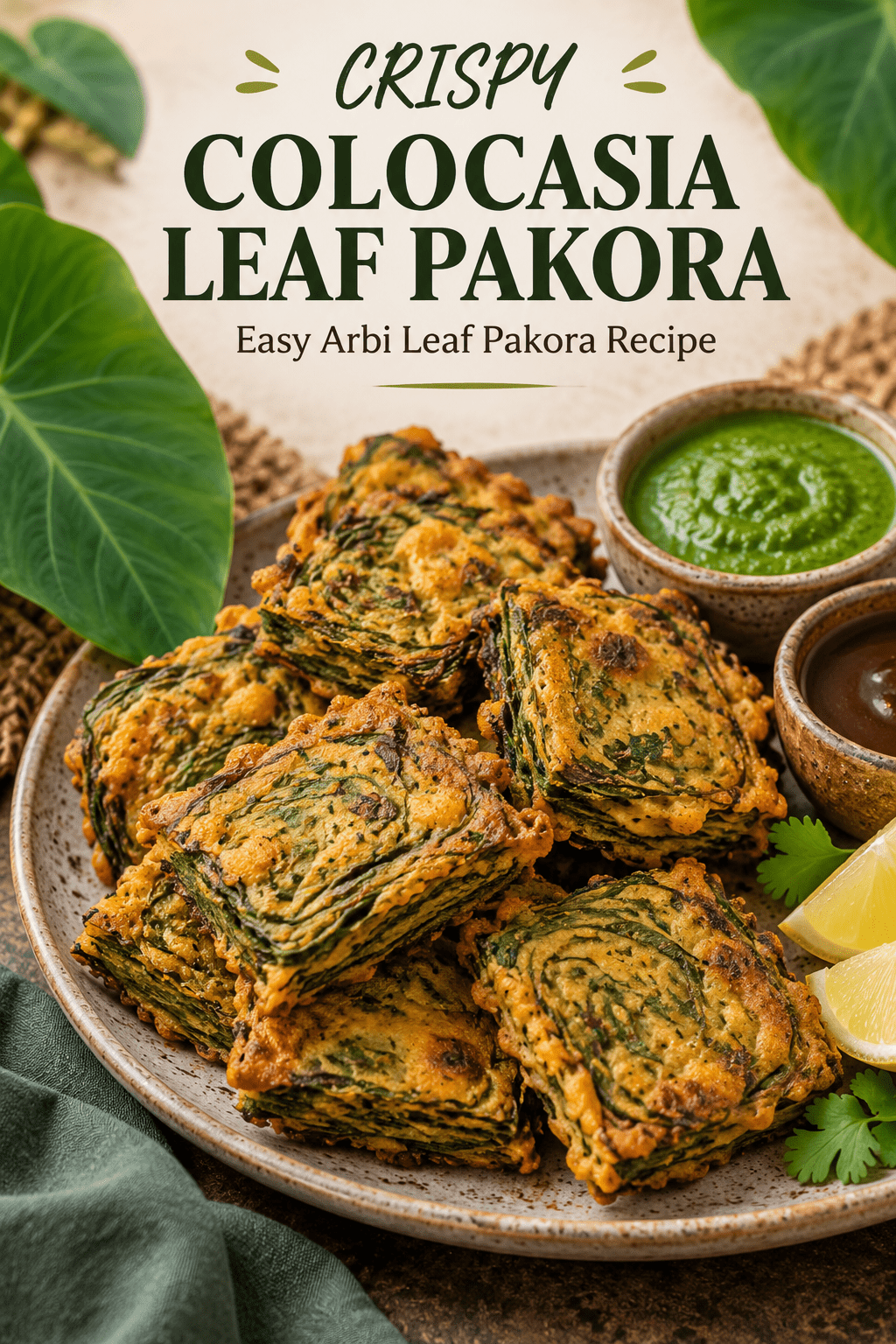
Crispy Colocasia Leaf Pakora (Arbi Leaf Pakora)
These crispy colocasia leaf pakoras are made by combining finely chopped colocasia leaves with gram flour, lemon, chilies and warm spices. The mixture is steamed until firm, cut into bite-size squares, then deep-fried until the edges become beautifully crisp and golden.

This recipe works well as a tea-time snack, party appetizer or savory side. The combination of besan and spices coats the chopped leaves, while the steaming step sets the mixture so it can be sliced neatly before frying.
Ingredients
- 8–10 medium edible colocasia (taro/arbi) leaves, washed and dried
- 1 1/2 cups besan (gram flour/chickpea flour)
- 2 tablespoons lemon juice
- 1–2 green chilies, finely chopped
- 1 teaspoon red chili powder, or to taste
- 1/2 teaspoon turmeric powder
- 1 teaspoon ground cumin
- 1/2 teaspoon ajwain (carom seeds)
- 1 teaspoon salt, or to taste
- 1–2 teaspoons sugar or jaggery, optional for a sweet-tangy balance
- About 1/3 to 1/2 cup water, added gradually as needed
- Neutral frying oil, enough for deep frying
- Extra lemon wedges, chutney or dipping sauce for serving
How to Make Colocasia Leaf Pakora
Wash and chop the leaves
Wash the colocasia leaves very well. Pat them dry, trim away the thickest central stems, then stack and chop the leaves into small pieces. Smaller pieces help the gram-flour mixture bind together more evenly.

Add lemon and seasonings
Place the chopped leaves in a large mixing bowl. Add the lemon juice, green chili, salt and any sweetener you are using. Toss the leaves so the acidic lemon juice is distributed throughout.

Add besan and spices
Add the besan, red chili powder, turmeric, cumin and ajwain. Mix thoroughly so the flour and spices coat the chopped leaves.

Make a thick mixture
Add water only a little at a time. The leaves will release some moisture as they are mixed, so avoid pouring in too much water at once. You want a thick, sticky mixture that can hold its shape rather than a thin pourable batter.

Steam until completely cooked
Lightly grease a heat-safe plate, shallow pan or steamer insert. Spread the mixture into an even layer about 1 to 1 1/2 inches thick. Steam over simmering water for about 20–25 minutes, or until the center is firm and a knife inserted into the mixture comes out without wet batter.
Allow it to cool for at least 10 minutes. Cooling helps the steamed mixture become firm enough to cut cleanly.
Cut into squares
Once cool enough to handle, cut the steamed slab into small squares or rectangles. Keep them fairly even in size so they fry at approximately the same rate.

Deep-fry until golden and crisp
Heat the oil in a deep, heavy pan to about 350°F (175°C). Carefully add a few pieces at a time. Do not overcrowd the pan. Fry until deep golden brown and crisp around the edges, turning the pieces as needed.
Remove with a spider strainer or slotted spoon and drain on a rack or paper towels. Repeat with the remaining pieces.

Serve hot
Serve the pakoras while hot and crisp with green chutney, tamarind chutney, yogurt sauce or fresh lemon wedges.

Kitchen Tool I Recommend
As an Amazon Associate I earn from qualifying purchases. If you purchase through the link below, I may earn a commission at no additional cost to you.

Misen Kitchen Knife
A sharp kitchen knife makes it much easier to trim the stems and finely chop the colocasia leaves before mixing them with the besan and spices.
Check Price on AmazonTips for the Best Pakoras
Let the steamed mixture cool before cutting it. Freshly steamed besan is soft, but it becomes noticeably firmer as it cools. That makes the pieces easier to transfer to the hot oil without breaking.
Fry in batches and keep the oil temperature reasonably steady. Oil that is too cool can make the pakoras greasy, while extremely hot oil can darken the outside before the pieces become evenly crisp.
Serving Ideas
These pakoras are especially good with coriander-mint chutney, tamarind chutney or a simple yogurt dip. For extra brightness, squeeze fresh lemon over them immediately before serving.
They also work well on a snack platter alongside sliced cucumber, onion, tomatoes and other savory appetizers.
Storage and Reheating
Store cooled leftovers in an airtight container in the refrigerator for up to 2–3 days. For the best texture, reheat them in an air fryer or a hot oven until the exterior is crisp again. A microwave will warm them, but the crust will be softer.
You can also steam the leaf mixture ahead of time, cool it, cut it into pieces and refrigerate it. Fry the pieces shortly before serving for the freshest texture.
Recipe Card
Crispy Colocasia Leaf Pakora
Steamed gram-flour and colocasia leaf squares deep-fried until golden and crisp.
Ingredients
- 8–10 medium colocasia leaves
- 1 1/2 cups besan
- 2 tbsp lemon juice
- 1–2 green chilies, chopped
- 1 tsp red chili powder
- 1/2 tsp turmeric
- 1 tsp ground cumin
- 1/2 tsp ajwain
- 1 tsp salt
- 1–2 tsp sugar or jaggery, optional
- 1/3–1/2 cup water, as needed
- Oil for deep frying
Instructions
- Wash, dry, trim and finely chop the colocasia leaves.
- Mix the leaves with lemon juice, green chili and salt.
- Add besan, chili powder, turmeric, cumin and ajwain.
- Add water gradually until a thick, sticky mixture forms.
- Spread in a greased heat-safe dish and steam 20–25 minutes, until fully set.
- Cool for at least 10 minutes, then cut into squares.
- Heat frying oil to about 350°F (175°C).
- Fry the pieces in batches until golden brown and crisp.
- Drain and serve hot with chutney or lemon.
Notes
Thorough cooking is important when preparing colocasia/taro leaves. If the leaves still cause an irritating or prickly sensation, do not eat them.
Frequently Asked Questions
Why are the pakoras steamed before frying?
Steaming cooks the colocasia leaves and sets the besan mixture into a firm slab. That allows you to cut neat pieces and then fry them for a crisp exterior.
Can I make them less spicy?
Yes. Reduce or omit the green chili and use less red chili powder. The cumin, turmeric and ajwain will still give the pakoras plenty of flavor.
Can I air-fry the pieces instead?
Yes. Brush or spray the steamed pieces lightly with oil and air-fry at about 390°F (200°C), turning once, until the edges are browned and crisp. The texture will be lighter than deep-fried pakoras.
What can I use instead of lemon juice?
Tamarind pulp is another traditional acidic option. Use enough to give the mixture a pleasant tang without making it watery.